
School dance planning
Middle School Dance Planning Guide for School Committees
You have been asked to run the middle school dance, and the questions arrive fast: how long should it be, how many chaperones, what music is allowed, and who handles pickup. A younger crowd changes the answer to each of them.
This guide pulls published planning advice into one working plan. It covers the timeline, supervision, music rules, a two-hour run of show, room checks, and the debrief, and it leaves school-specific policy to your administration.
What makes a middle school dance different
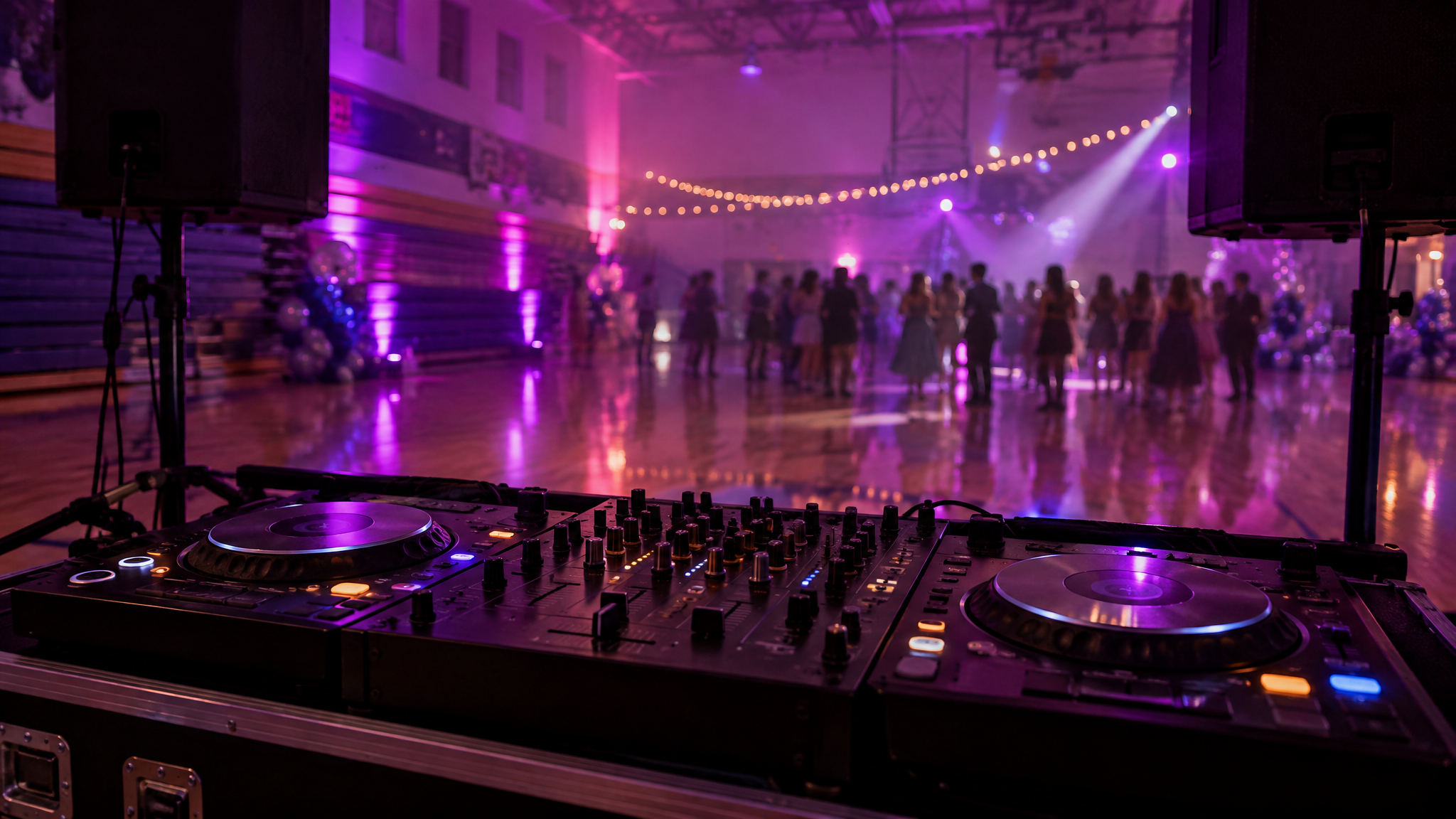
A middle school dance is not a smaller prom. The crowd is younger, the hours are shorter, parents care more about pickup than about the playlist, and the adults in the room carry more of the supervision. The TouchWall school dance planning guide lists middle school as its own event type, with higher chaperone ratios, structured activities, and earlier event times.
Coach Kyle Entertainment's school dance timeline is written for a gym, a few hundred students, and volunteers with day jobs. It suggests two hours as plenty for grades 5 to 8, where high school dances can run up to three. That one decision shapes the music plan, the staffing plan, and the pickup plan.
Start eight to twelve weeks out
Both guides put the start of planning at 8 to 12 weeks before the dance. Coach Kyle calls eight weeks comfortable for a regular dance and suggests 10 to 12 weeks for homecoming, prom, or a popular spring Friday, since those are the dates everyone wants. TouchWall recommends a planning committee with student representatives, a faculty advisor with event authority, a parent volunteer coordinator, and an administrator who approves policy.
Four decisions to make first
- The date: check the school calendar for games, concerts, and testing weeks, because a dance on a home game night splits the crowd.
- The room: usually the gym. Ask who opens it, when the custodian leaves, and whether the floor needs a cover.
- The hours: two hours for grades 5 to 8.
- The budget: what the PTO or activity fund can front and what tickets must cover.
Then name one point of contact. The entertainer, the custodian, and the chaperones should all call the same person on the night.
Dances for younger students still need a DJ who understands school rules, clean music, and room setup. See how school dance DJ service works
A timeline for the whole planning window
The table below combines the two guides into one working schedule. Adjust the weeks to your school calendar and your administration's approval rules.
| When | Task | Owner |
|---|---|---|
| 8 to 12 weeks out | Get administrative approval, set the date, confirm the room and the budget | Advisor and administrator |
| 6 to 4 weeks out | Book the entertainer, count chaperone posts, confirm custodian hours | Advisor |
| 4 to 2 weeks out | Choose a theme, set up presale tickets, print the check-in list, send the rules sheet home | Committee and advisor |
| Final 2 weeks | Send one schedule email, shop for snacks and prizes, walk the room against the fire rules | Advisor |
| Night of | Setup, chaperone huddle, doors, run of show, pickup | Everyone on the plan |
| Within a week after | Hold a 20-minute debrief and file the notes with the budget | Advisor and committee |
Supervision and chaperone posts
Both guides give the same general range: at least one adult chaperone for every 20 to 30 students, with your own school or district policy coming first. Coach Kyle makes a practical point worth copying. Count posts before you count people. A post is a place where an adult needs to be, and a dance has more of them than most committees expect.
| Post | What the adult does |
|---|---|
| Entrance | Checks the list and stops anyone leaving from coming back in |
| Check-in table | Runs the printed list by grade and handles wristbands or hand stamps |
| Restroom hallway | Watches the hallway and rotates on a schedule |
| Snack table | Keeps food away from the dance floor |
| Dance floor | Stays visible and enforces the dance rules |
| Pickup door | Releases students to a parent or named adult |
TouchWall adds that an administrator or other designated authority should be on site, and that larger dances may call for security or a school resource officer. Ask your administration which applies to your school.
Entry, rules, and pickup
Selling tickets in advance gives you a headcount for snacks and chaperones. A check-in list by grade and a wristband or hand stamp at the door make it easy to spot anyone who has left the room. Coach Kyle suggests a simple no re-entry rule and one rules sheet sent home with the date, hours, dress code, guest policy, re-entry policy, and the pickup time and door. Put the pickup time in bold.
Music rules for younger students
Music is where middle school dances need the most care. TouchWall advises giving the entertainer explicit guidelines about lyrics, themes, and derogatory language, requiring edited versions, giving the DJ authority to skip anything inappropriate, and screening student requests before they are played. Coach Kyle's list of things to confirm before signing includes clean edits only, how requests get screened, and who makes the announcements.
Shape the night like a short story
TouchWall describes a warm-up of mid-tempo, recognizable hits, followed by energy building and a clear final cue. With only two hours, Coach Kyle suggests starting with line dances and group songs, since they are the easiest way to get a middle schooler off the wall. Keep the music playing before the doors open so nobody walks into a silent gym.
Run of show for a two-hour dance
Coach Kyle offers a simple run of show that works for a middle school gym. Use it as a starting point and adjust to your doors, your crowd, and your pickup plan.
| Time | What happens |
|---|---|
| 90 minutes before | Decorating crew and entertainer arrive, and the snack table goes up away from the dance floor |
| 30 minutes before | Chaperone huddle covering posts, restroom rotation, and hallway walks |
| Doors open | Check-in runs the list, and music is already playing |
| First 30 minutes | Line dances and group songs |
| Halfway | A contest, raffle, or snack break resets the room |
| 15 minutes before the end | Last song is called and pickup is announced |
| End | House lights up and students leave by one door to a parent |
Room, power, and fire rules
Coach Kyle recommends picking the DJ corner first. Find two wall outlets in one corner, away from the exit doors, and tell the entertainer which corner it is. That one choice sets where the dance floor and snack table go and keeps cords out of walkways.
Fire rules vary by state and by town, so ask your fire marshal or facilities office. The guide cites common concerns from Ohio fire code summaries: exits cannot be blocked by tables or chairs, fabric decorations should not cover more than 10 percent of a wall or ceiling, and extension cords are not allowed. Treat these as a prompt to ask, not as the rule in your town.
Some rooms need more than a speaker and a table, such as staging, lighting, and a planned layout. Learn about school event production
Budget and tickets
TouchWall suggests building the budget from activity fund allocations, conservative ticket projections, parent organization contributions, and local sponsorships, then listing every expected cost: venue or facility fees, entertainment, decorations, food, supervision, photography, tickets, and cleanup. Coach Kyle suggests selling at the door too, at a slightly higher price than presale. This guide does not repeat the dollar ranges either source quotes, because prices vary by region and date. Collect your own quotes and compare them in writing.
After the dance
Within a week, hold a 20-minute debrief. Write down the headcount, what ran out, what was left over, which door jammed at pickup, and what students asked for. Save it with the budget so next year's chair starts with facts. TouchWall also recommends thanking the committee, volunteers, and chaperones, and surveying students and staff.
Common middle school dance mistakes
- Planning by headcount instead of by chaperone post.
- Leaving pickup time and door off the parent rules sheet.
- Allowing re-entry, which sends adults chasing students through hallways.
- Letting requests reach the DJ without screening.
- Running three hours when two will do.
- Skipping the debrief, so the next committee starts from scratch.
Dances for older students share many of these questions and add formal-night details. Explore homecoming DJ planning
Common questions
How far in advance should we plan a middle school dance?
Eight weeks is comfortable for a regular dance, and 10 to 12 weeks is safer for homecoming or a popular spring date.
How long should a middle school dance last?
Two hours works well for grades 5 to 8. High school dances can run longer.
How many chaperones do we need?
Published guidance suggests at least one adult for every 20 to 30 students, but your district policy comes first. Plan by post, not only by headcount.
What music rules should we set?
Require clean edits, give the entertainer authority to skip any track, and screen student requests before they are played.
Should we allow students to leave and come back in?
Many schools use a simple no re-entry rule so staff are not chasing students through hallways. Follow your school policy.